.png)
Building Southeast Asia's Entrepreneur Ecosystem: Business Opportunities in the Philippines
Jack Yang laid out the Philippines’ 180-billion-peso SME financing gap for a room of Singaporean investors, and the invitation now is to see the model in action.
.png)
Inside the Entrepreneur Ecosystem: The 180-Billion-Peso Blind Spot in Southeast Asia's Investment Playbook
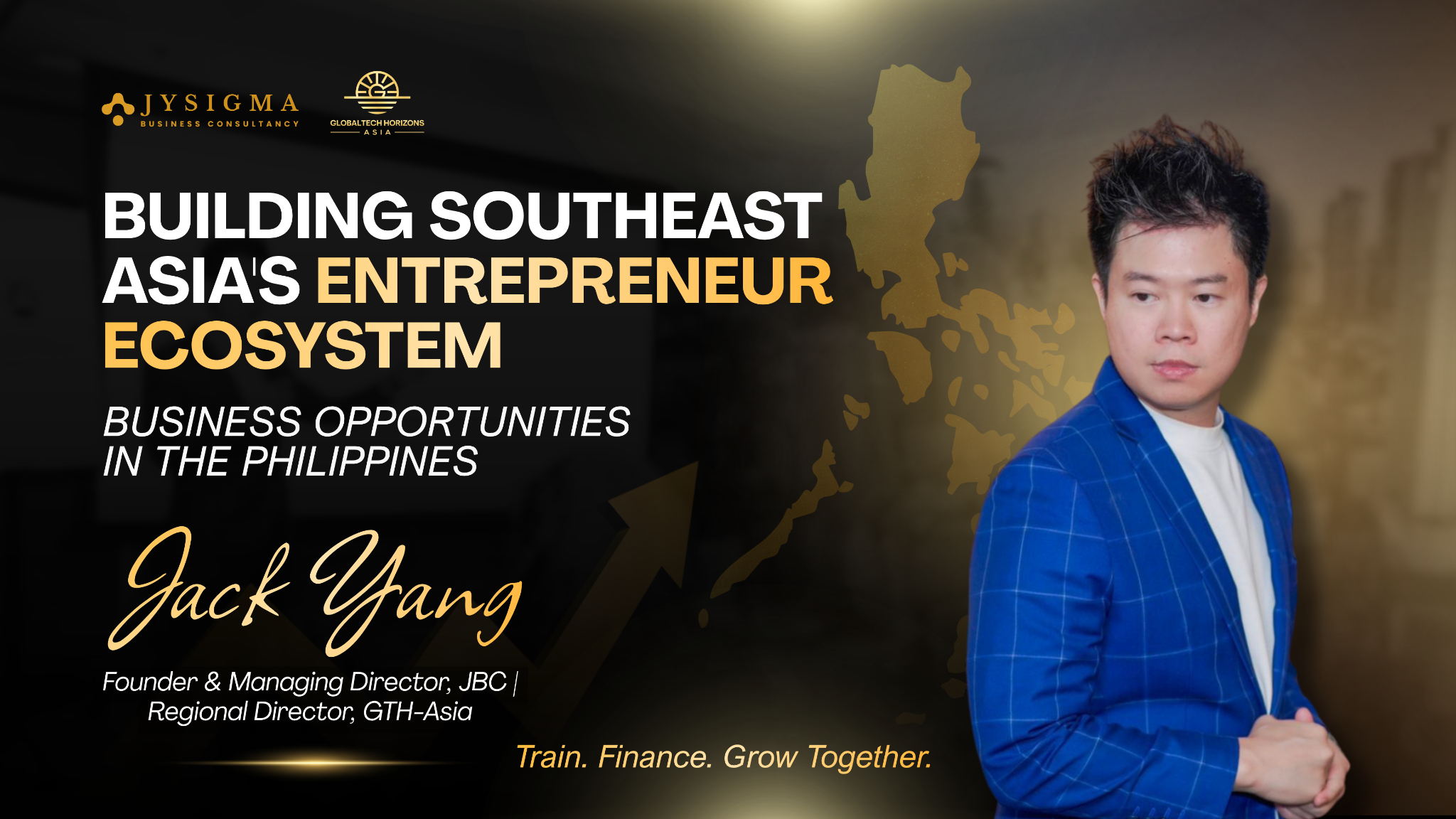
Most people who hear the phrase “SME financing gap” assume it is a banking problem. Give people access to money and the problem solves itself. That assumption is exactly what Jack Yang, Founder and Managing Director of JYSigma Business Consultancy and Regional Director of GlobalTech Horizons Asia, spent his presentation at Eclipse Network Night dismantling in front of a room of Singaporean and foreign investors, business leaders, and family offices.
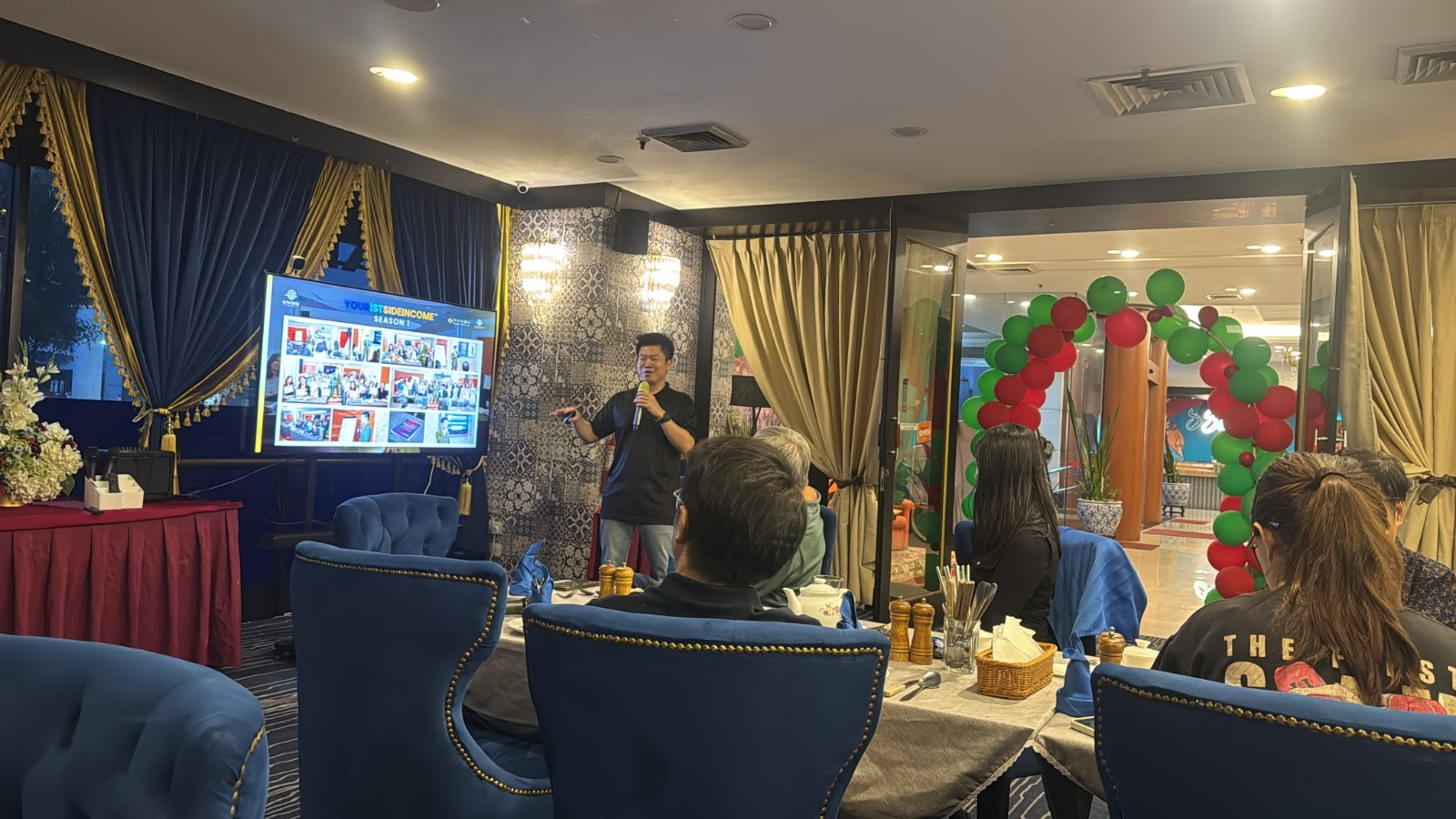
Money alone was never the fix. What actually moves a struggling micro-enterprise, a first-time entrepreneur, or a working professional with a side idea from stuck to scaling is a system, not a single transaction. That is the core idea behind the entrepreneur ecosystem Jack laid out on July 25, 2026, at Eclipse Rasa Sayang, an event hosted by Tan Kin Lian, a well known Singaporean business figure.
The system before the money: how the ecosystem actually works
Jack’s presentation was built around a simple but often ignored sequence. Before capital ever changes hands, a person or a business needs to go through three layers, and skipping any one of them is why so many financing programs across Southeast Asia fail to produce lasting results.
Layer one is validation and structured learning. This is where programs like Your1stSideIncome™ come in, JYSigma’s own seminar model that has already run multiple seasons across the Philippines. Participants walk in with an idea that has lived in their head, sometimes for years, and walk out with a validated concept, a clear positioning, and a working model for how that idea actually becomes income. The format is deliberately uncomfortable in a useful way. A Shark Tank-style pitching session forces people to say their idea out loud to strangers and hear direct feedback from mentors, which is often the first time an idea has ever been tested outside their own head. Execution matters more than perfection is the operating line, and it changes how people behave the moment they hear it seriously.
Layer two is mentorship that does not stop at graduation. A one-day seminar or a single training session rarely produces lasting change on its own. What Jack described in his talk was continuous, hands-on guidance that follows a founder or a business owner past the point most programs consider their job finished, through the early months where most ideas actually die.
Layer three is financing that is sized to where the business actually is. This is the role GTH Rise Philippines plays inside the ecosystem, targeted micro-financing that only makes sense once the first two layers are in place. Capital handed to someone who has not gone through validation and mentorship tends to disappear into the same habits that created the funding gap in the first place. Capital handed to someone who has already been through a structured system behaves completely differently, because the discipline is already built.
Put together, this is what Jack means when he talks about an entrepreneur ecosystem rather than a loan product or a seminar. Education, mentorship, and financing are not three separate offerings. They are three stages of the same pipeline, and JYSigma Business Consultancy, Your1stSideIncome™, and GTH Rise Philippines exist specifically to run each stage without a gap between them.
The financing gap the ecosystem is built to close
Micro, small, and medium enterprises make up 99.6 percent of all registered businesses in the Philippines and account for roughly two thirds of national employment. Despite that weight, MSMEs receive less than five percent of total bank lending in the country. The Department of Trade and Industry estimates the financing gap at around 180 billion pesos, and independent analysts argue the real number is higher once informal and unregistered micro-enterprises are counted.
This is not a story about businesses that failed to plan. It is a story about a lending system built for a different kind of borrower. Most Philippine MSMEs cannot produce the audited financials, collateral documentation, or credit history that traditional banks require, not because the business is weak, but because the bookkeeping and formal structure were never built into the operation in the first place. Banks call this credit risk. On the ground, it looks more like a working-class family running a sari-sari store with real cash flow and zero paper trail, or a Filipino professional with a real skill and no framework for turning it into a second income stream.
Why a one-time loan rarely works, and what does instead
One point Jack kept returning to during the presengtation was blunt: handing a struggling micro-enterprise a one-time loan without changing how that business operates almost never produces lasting change. The owner pays down the loan, the underlying financial habits stay the same, and the business is back at the same funding wall within a year or two.
Real economic resilience needs the three layers working together, not one in isolation: (1) Structured business education that teaches owners how to read their own numbers, the same principle behind Your1stSideIncome™ seminars, (2) Hands-on mentorship that continues after the training ends and after the capital is disbursed, not just before it, and (3) Financing that is sized and timed to the actual growth stage of the business, not a generic loan product.
The philosophy is simple to state and hard to execute well: give a founder a real execution system, not just a check or a certificate, and you build something that survives the first bad month.
What Singaporean and foreign investors were actually asking
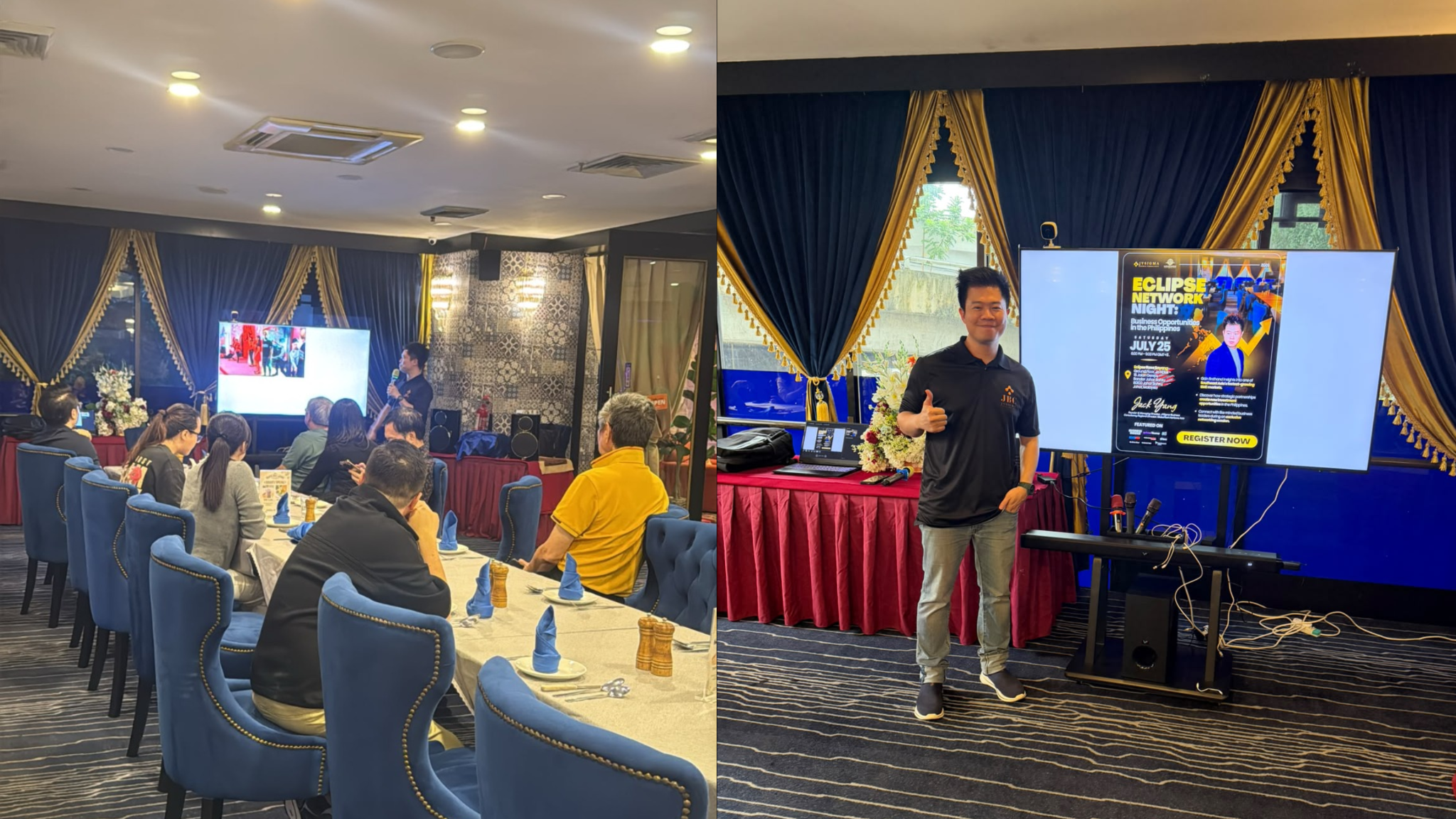
The Q&A session ran long, and the questions clustered around a few recurring themes that are worth surfacing here, because they reflect exactly what serious capital wants to know before it moves into a new market.
Investors wanted to understand how risk is underwritten when the standard credit data does not exist. They asked about repatriation of returns, regulatory friction between Singapore and the Philippines, and how a Singapore-based investor actually gets exposure to this kind of on-the-ground lending without having to build local infrastructure from scratch. They also asked, more than once, what makes this different from the microfinance models that already exist in the region.
The honest answer to that last question is structure. Microfinance alone has been tried at scale across Southeast Asia for two decades, with mixed results, largely because capital was deployed without a mechanism to change the underlying operational discipline of the borrower. Capital without structure fails. Capital paired with scalable systems multiplies into real opportunity. That was the framing Jack offered the room, and it is the operating thesis behind JYSigma Business Consultancy, Your1stSideIncome™, and GTH Rise Philippines together.
A room of investors does not spend twenty minutes pressing on underwriting mechanics and repatriation structure unless the thesis has already cleared the first bar, which is credibility. Jack earned that in the room by being specific about what does not work before explaining what does, and by pointing to a program that is already running rather than one that exists only on a slide.
It is not only for investors
The ecosystem Jack described is not built exclusively for people writing checks. The same three-layer system, validation and learning, mentorship, and financing, is exactly what a Filipino professional juggling a full-time job needs to turn a skill into a real side income, and exactly what a first-time micro-entrepreneur needs to move from surviving to scaling. Investors sit at one end of this ecosystem. Aspiring entrepreneurs and existing business owners sit at the other end. Both groups are part of the same system, and the presentation was as much about explaining that system to future participants as it was about explaining it to future funders
The invitation: join us in the Philippines this August
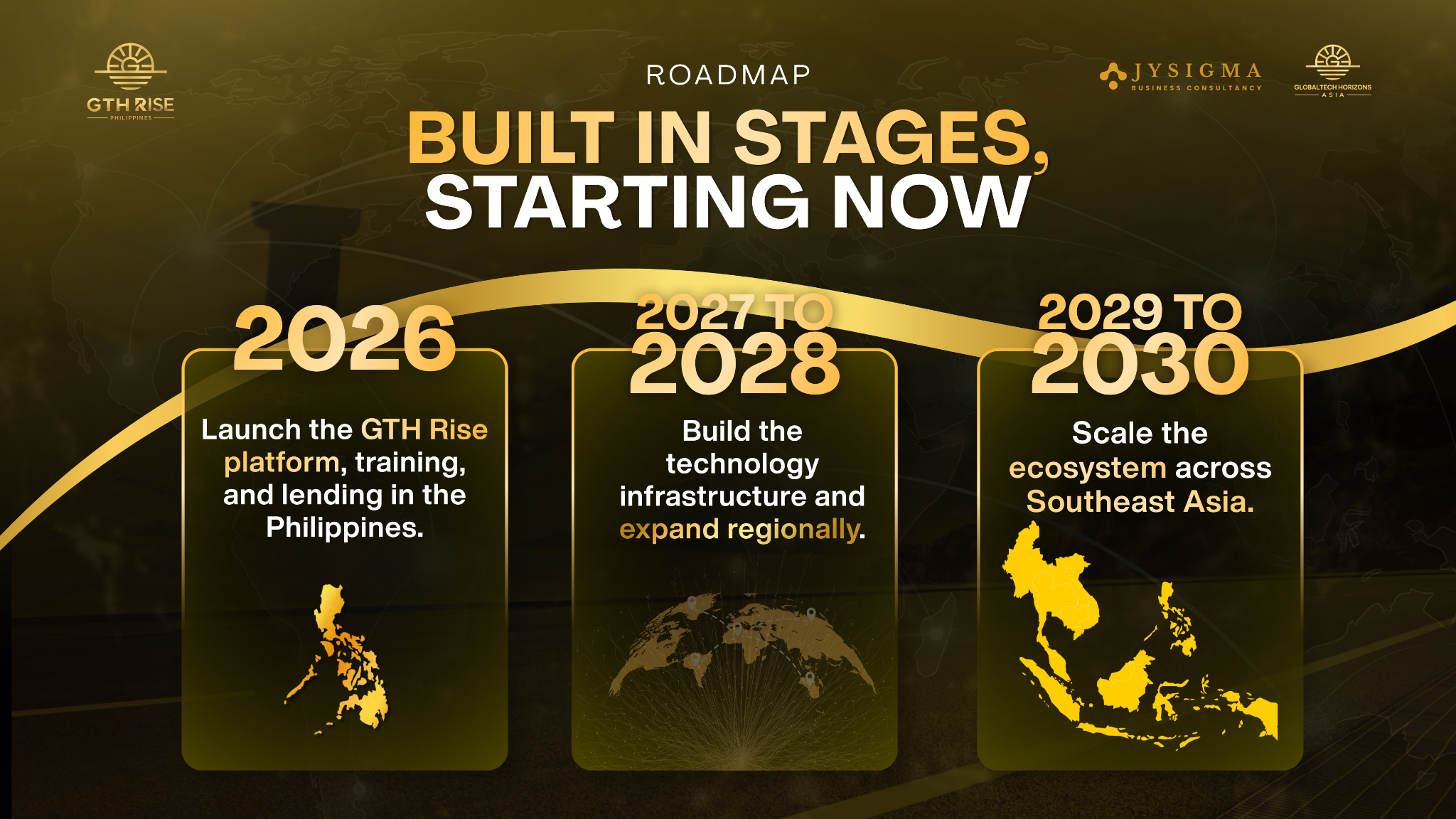
GTH Rise Philippines is expanding its rollout this August, extending the training and micro-financing model to more communities on the ground. This is the natural next step for anyone who heard Jack’s presentation in Johor Bahru and wants to see the model in action, and it is equally open to investors, partners, and leaders who could not make it to Eclipse Rasa Sayang.
Details on the August Philippines gathering are still being finalized, but the door is open now. If you want to be part of this expansion, whether as an investor, a partner, or simply someone who wants to understand the model firsthand, the way to start is to register your interest today.
You can learn more about JYSigma Business Consultancy’s advisory work at gojbc.com, and explore GTH-Asia’s financing and investment platforms at gth-asia.com. For those interested in the Philippine micro-financing model specifically, GTH Quickfund is a good place to start.
The Philippines does not need more short-term charity. It needs investors and operators willing to build the structure first. That was the thesis Jack presented in Johor Bahru, and this August, you can see it in motion. Reach out to be added to the list.
Frequently Asked Questions (FAQs)
Is it safe for Singaporean investors to put money into Philippine SME financing? Risk exists in any cross-border lending, but structured models that pair financing with business training and local partnerships significantly reduce default risk compared to unstructured microloans.
What is the actual financing gap for Philippine SMEs? Estimates range from 67 billion to 180 billion pesos depending on the source, with MSMEs receiving less than five percent of total Philippine bank lending despite making up over 99 percent of registered businesses.
How is GTH Rise Philippines different from typical microfinance? It combines targeted micro-financing with hands-on mentorship and structured business education, rather than deploying capital on its own.
Why do Philippine MSMEs struggle to get bank loans even when the business is profitable? Most cannot produce the audited financials, collateral, or formal credit history banks require, even when actual cash flow is healthy.
How can I join the GTH Rise Philippines expansion happening this August? Details are still being finalized, but interested investors and partners can register their interest now through JYSigma Business Consultancy or GTH-Asia to be added to the list.


Want to know more? Contact our business consultant
Expert guidance on Business to maximize returns and minimize risks.
Recent Blogs

GTH Quickfund Opens First Philippine Branch in Valenzuela City to Expand MSME Loan Access

GlobalTech Horizons Asia (GTH-Asia) Completes 2025 Preparation Phase and Advances Into 2026 to Evaluate Up to USD 100 Million in Structured Capital Across Southeast Asia
